Cart 0
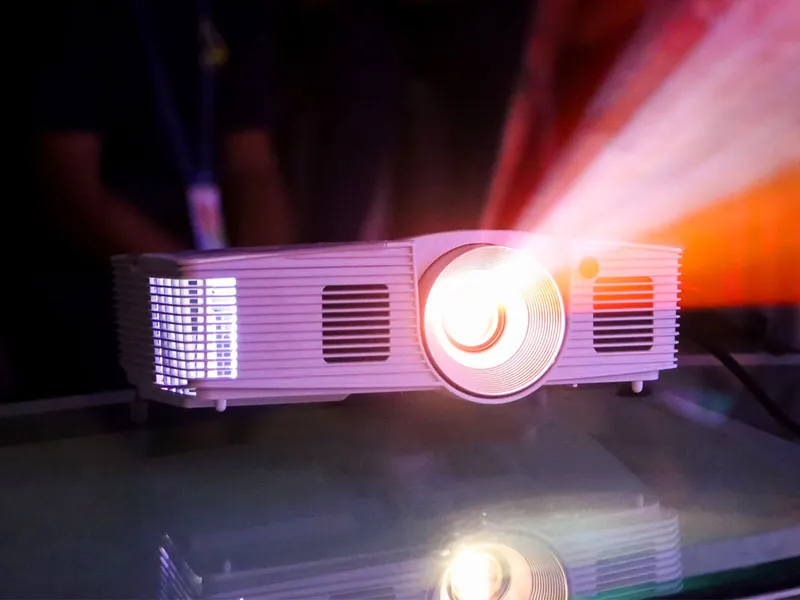
What should be the brightness of the projector?
There is a wide range of projectors on the market today with different brightnesses. More often than not, a simple rule of thumb applies: the brighter the projector, the higher the cost. When it comes to “optimal brightness” the rule is simple: get the brightest projector you can provide.
What to look for when choosing projector brightness:
- The number of people in the room for whom the image is being projected. This determines the size of the projected image that is required to be easily seen by all participants. The larger the number of people, the larger the image, hence the light is distributed over a larger surface area, hence the perceived brightness is reduced.
- Lighting in the room. A dark room will provide the best image regardless of the brightness of the projector, however, most meetings require some lighting so that participants can have eye contact with each other and be able to take any written notes. A room where the lights cannot be turned off or dimmed within the room, or there is no way to get rid of direct sunlight, will reduce the brightness of the projected image and will require a more powerful projector.
- What kind of screen is available? This can have a strong impact on image brightness and quality. Most movie screens today provide, significantly lighter reflections, making even a relatively weak projector look good if the latter is properly set up. If there is no screen in the room, as is sometimes common in mobile commercial presentations, then a more powerful projector will be required, as the wall is a poor reflector of light.
- What is your task? Tasks such as training and workgroups will require more brightness because of the need to see not only the overall scene but also details. These tasks also require more lighting in the room for recording lectures and mutual communication between participants. Tasks that utilize presentation graphics or video are visually less demanding and are more likely to be shown in a darker room.
If you require a projector for mobile use (within a building, or even traveling), this factor should be considered as well.
Brightness is measured in ANSI (American National Standards Institute) lumens: the brighter the projector, the higher the ANSI-lumen rating. In today’s market, projectors can be grouped as follows:
- less than 1000 lumens are the lowest light output projectors. They make up the lowest price range. They are reasonable if you have a very small budget for the purchase of a projector. In this category, there is a wide range of devices that may well meet your needs. But keep in mind that the low power means that you will need to darken the room to get a visible image.
- 1000 – 2000 lumens – this lumen range is the next step up in performance and price. There is a large selection of both SVGA and XGA projectors in this range. These are suitable for normal business boardroom and classroom use. The projection will be seen with normal room lighting, perhaps slightly dimmed for better image perception, i.e. a completely dark or dimly lit room is no longer necessary.
- 2000 – 4000 lumens is the range of the most efficient portable and semi-portable projectors. Products in this class are suitable for large meeting rooms and classrooms. They offer more flexibility in choosing the ambient light of the room, as the image is bright enough to maximize room illumination for a comfortable experience. They also offer more options in audience size, as they can illuminate a larger screen without meaningful loss of image quality.
- 4000 lumens or more are ultra-bright projectors. The prices of these units have a very wide range depending on other features. They are used for a variety of purposes from large meeting rooms, auditoriums to concert halls, nightclubs, etc.